

A significant supply chain attack hit NPM after 16 popular Gluestack ‘react-native-aria’ packages with over 950,000 weekly downloads were compromised to include malicious code that acts as a remote access trojan (RAT).BleepingComputer determined that the compromise began on June 6 at 4:33 PM EST, when a new version of the react-native-aria/focus package was published to NPM. Since then, 16 of the 20 Gluestack [react-native-aria packages](https://www.npmjs.com/org/react-native-aria) have been compromised on NPM, with the threat actors publishing a new version as recently as two hours ago. 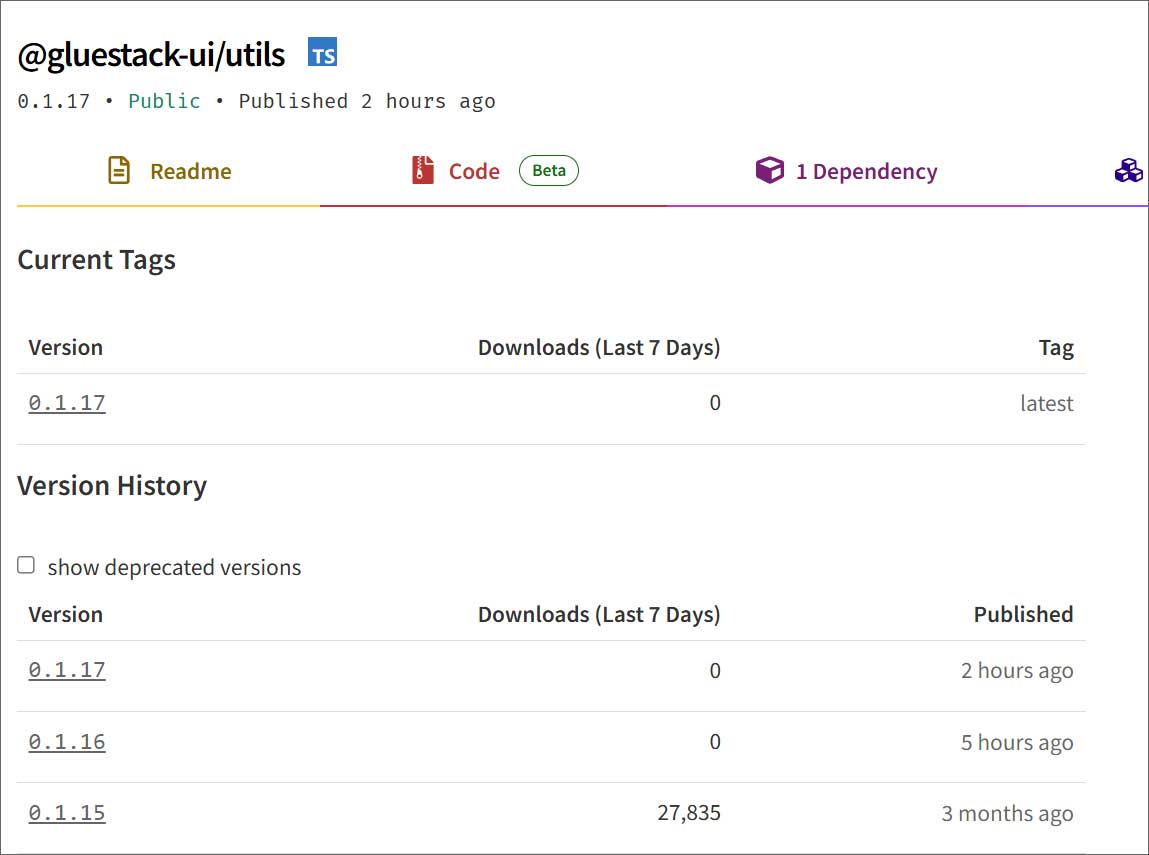 **Ongoing compromise of NPM packages** *Source: BleepingComputer*The supply chain attack was discovered by cybersecurity firm [Aikido Security,](https://www.aikido.dev/) who discovered obfuscated code injected into the `lib/index.js` file for the following packages:**Package Name** **Version** **Weekly Downloads** react-native-aria/button 0.2.11 51,000 react-native-aria/checkbox 0.2.11 81,000 react-native-aria/combobox 0.2.10 51,000 react-native-aria/disclosure 0.2.9 3 react-native-aria/focus 0.2.10 100,000 react-native-aria/interactions 0.2.17 125,000 react-native-aria/listbox 0.2.10 51,000 react-native-aria/menu 0.2.16 22,000 react-native-aria/overlays 0.3.16 96,000 react-native-aria/radio 0.2.14 78,000 react-native-aria/switch 0.2.5 477 react-native-aria/toggle 0.2.12 81,000 react-native-aria/utils 0.2.13 120,000 gluestack-ui/utils 0.1.17 55,000 react-native-aria/separator 0.2.7 65 react-native-aria/slider 0.2.13 51,000These packages are very popular, with approximately 960,000 weekly downloads, making this a supply chain attack that could have widespread consequences.The malicious code is heavily obfuscated and is appended to the last line of source code in the file, padded with many spaces, so it’s not easily spotted when using the code viewer on the NPM site. 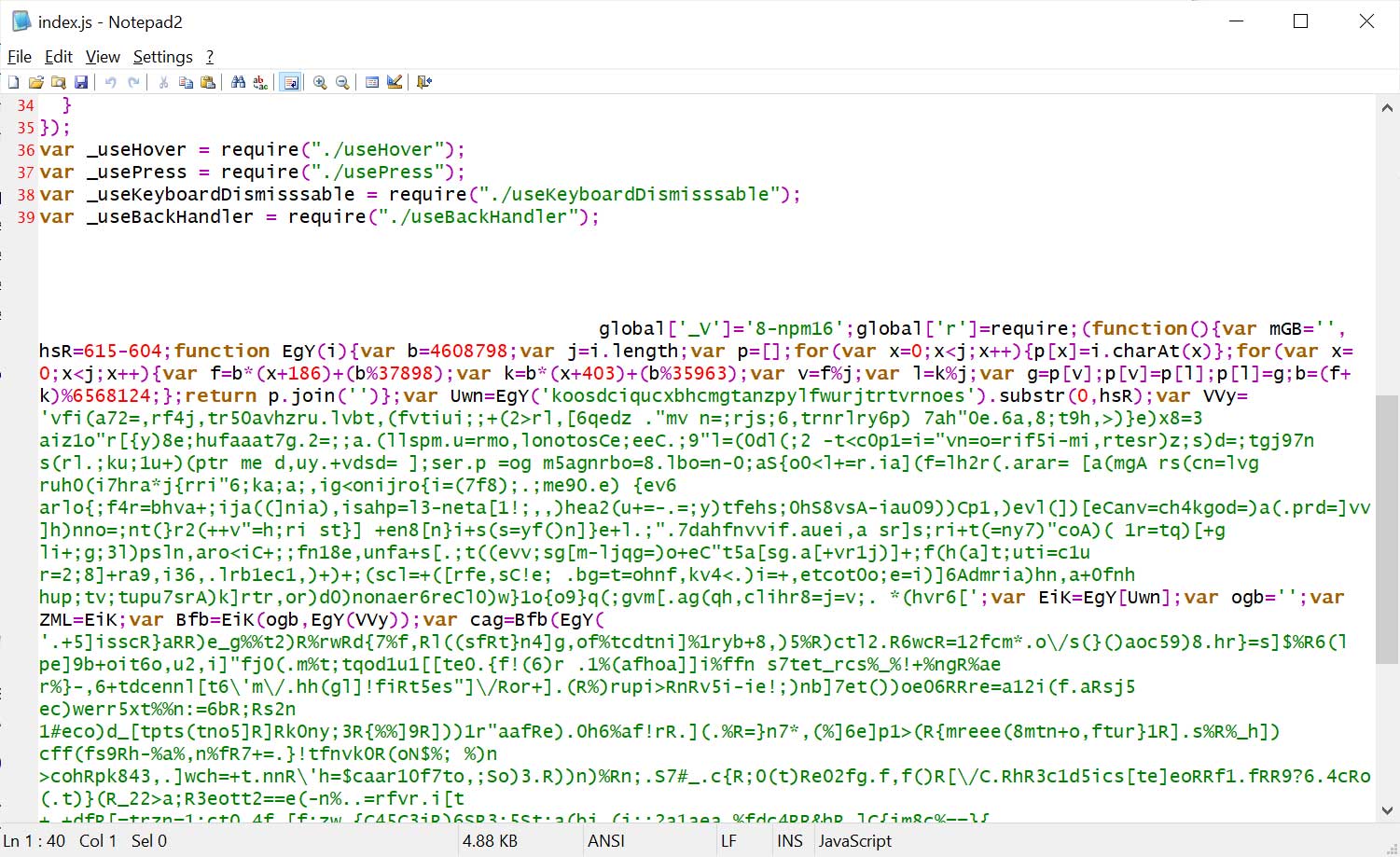 **Malicious code added to end of index.js file** *Source: BleepingComputer*Aikido told BleepingComputer that the malicious code is nearly identical to a remote access trojan in [another NPM compromise they discovered](https://www.aikido.dev/blog/catching-a-rat-remote-access-trojian-rand-user-agent-supply-chain-compromise) last month.The researcher’s analysis of the previous campaign explains that the remote access trojan will connect to the attackers’ command and control server and receive commands to execute.These commands include:* **cd -**Change current working directory* **ss_dir -**Reset directory to script’s path* **ss_fcd:-**- Force change directory to -* **ss_upf:f,d -**Upload single file f to destination d* **ss_upd:d,dest -**Upload all files under directory d to destination dest* **ss_stop -**Sets a stop flag to interrupt current upload process* **Any other input -**Treated as a shell command, executed via child_process.exec()The trojan also performs Windows PATH hijacking by prepending a fake Python path (%LOCALAPPDATA%–Programs–Python–Python3127) to the PATH environment variable, allowing the malware to silently override legitimate python or pip commands to execute malicious binaries.Aikido sercurity researcher Charlie Eriksen has attempted to contact Gluestack about the compromise by creating [GitHub issues](https://github.com/gluestack/gluestack-ui/issues/2894) on each of the project’s repositories, but there has not been any response at this time.’No response from package maintainers (it’s morning on a saturday in the US which is prob exactly why its happening now),’ Arkido told BleepingComputer.’NPM we have contacted and reported each package, this is a process that usually takes multiple days for NPM to address though.’Aikido also attributes this attack to the same threat actors who compromised four other NPM packages earlier this week named *biatec-avm-gas-station* , *cputil-node* , *lfwfinance/sdk* , and *lfwfinance/sdk-dev*.BleepingComputer reached out to Gluestack about the compromised packages but has not received a reply at this time.  [Why IT teams are ditching manual patch management](https://www.tines.com/access/guide/unlocking-it-agility-with-automation-patch-management/?utm_source=BleepingComputer&utm_medium=paid_media&utm_content=june-in-article-banner)———————————————————————————————————————————————————————————————————————————–Patching used to mean complex scripts, long hours, and endless fire drills. Not anymore.In this new guide, Tines breaks down how modern IT orgs are leveling up with automation. Patch faster, reduce overhead, and focus on strategic work — no complex scripts required.[Get the free guide](https://www.tines.com/access/guide/unlocking-it-agility-with-automation-patch-management/?utm_source=BleepingComputer&utm_medium=paid_media&utm_content=june-in-article-banner) ### Related Articles:[Supply chain attack hits npm package with 45,000 weekly downloads](https://www.bleepingcomputer.com/news/security/supply-chain-attack-hits-npm-package-with-45-000-weekly-downloads/)[Malicious NPM package uses Unicode steganography to evade detection](https://www.bleepingcomputer.com/news/security/malicious-npm-package-uses-unicode-steganography-to-evade-detection/)[Malicious PyPI packages abuse Gmail, websockets to hijack systems](https://www.bleepingcomputer.com/news/security/malicious-pypi-packages-abuse-gmail-websockets-to-hijack-systems/)[AI-hallucinated code dependencies become new supply chain risk](https://www.bleepingcomputer.com/news/security/ai-hallucinated-code-dependencies-become-new-supply-chain-risk/)[Malicious npm packages posing as utilities delete project directories](https://www.bleepingcomputer.com/news/security/malicious-npm-packages-posing-as-utilities-delete-project-directories/)
Related Tags:
NAICS: 334 – Computer And Electronic Product Manufacturing
NAICS: 541 – Professional
Scientific
Technical Services
NAICS: 518 – Computing Infrastructure Providers
Data Processing
Web Hosting
Related Services
NAICS: 33 – Manufacturing – Metal
Electronics And Other
NAICS: 51 – Information
Blog: BleepingComputer
Deobfuscate/Decode Files or Information
File and Directory Discovery
Exploitation for Privilege Escalation
Associated Indicators: