

* [Security Advisory](https://blog.sucuri.net/category/security-advisory)* [Website Malware Infections](https://blog.sucuri.net/category/website-malware-infections)* [WordPress Security](https://blog.sucuri.net/category/wordpress-security)Contact Form Spam Attack: An Innocent Feature Caused a Massive Problem====================================================================== [Gabriel Barbosa](https://blog.sucuri.net/author/gabriel)* October 17, 2025  How a simple ‘Send a copy to yourself’ feature led to 149,700 spam emails and what you can do to prevent itThe Emergency Call——————It started like many server emergencies do — with a panicked message about massive server performance issues. A client’s website was grinding to a halt, CPU usage was through the roof, and something called **`dovecot/lmtp`** was consuming enormous resources. But this wasn’t just a performance problem — it was the beginning of uncovering a sophisticated spam operation hiding in plain sight.The Initial Symptoms——————–When we first connected to the server, the signs were alarming:* High CPU usage from email-related processes.* Massive email queue building up.* Server struggling under unexpected load.* Spam complaints from recipients.The first command we ran revealed the scope of the problem:“`exim -bp | wc -l149700“`**149,700 emails** were sitting in the outbound queue. This wasn’t just a small spam problem — this was a *massive* issue for the server.Following the Digital Breadcrumbs———————————### Step 1: Understanding the Email HeadersThe investigation began by examining the email headers from the server logs. Here’s what we found in the failed delivery reports:“`Sender User: website_userSender Domain: website.comFrom Address: website_user@serverhost.netSender Host: localhostSender IP: 127.0.0.1Authentication: localuser“`The key indicators were:* **Localhost origin (127.0.0.1)** — emails were being generated by scripts on the server.* **Local user authentication** — not external SMTP relay abuse.* **Consistent sender domain** — all emails appeared to come from the legitimate website.### Step 2: Examining the Email LogsWe dove deeper into the PHP error logs and found the smoking gun:“`[29-Sep-2025 15:06:58 UTC] mail() on [/home/user/public_html/libraries/vendor/phpmailer/phpmailer/src/PHPMailer.php:880]: To: ‘info@website.com ‘ Subject: Website_Name:Adult_dating_with_tens_of [29-Sep-2025 15:06:59 UTC] mail() on [/home/user/public_html/libraries/vendor/phpmailer/phpmailer/src/PHPMailer.php:880]: To: ‘spammer@sender.com ‘ Subject: Copy_of:Adult_dating_with_tens_of_millions_of “`This revealed a crucial pattern:1. **Dual email delivery:** Each spam submission generated TWO emails.2. **First email:** Went to the site owner (info@website.com).3. **Second email:** Went to external addresses with ‘Copy of:’ prefix.4. **Timing:** Sent within seconds of each other.5. **Reply-To manipulation:** Headers pointed back to the spammers.### Step 3: The Hunt for the SourceInitially, we suspected the usual culprits:* Malware-infected WordPress plugins* Compromised PHP files with backdoors* Hacked PHPMailer libraryWe systematically checked each possibility:“`grep -r ‘eval(‘ /home/user/public_html/ –include=’.php’ grep -r ‘base64_decode’ /home/user/public_html/ –include=’.php’ find /home/user/public_html -name ‘*.php’ -mtime -7 -exec ls -la {} ; head -20 /home/user/public_html/libraries/vendor/phpmailer/phpmailer/src/PHPMailer.php“`Surprisingly, everything checked out. The PHPMailer library was legitimate, no malicious files were found, and no obvious backdoors existed.The Discovery————-The pattern in the email logs held the key. The ‘Copy of:’ prefix in the subject lines was the crucial clue. This wasn’t random — it suggested an automated ‘copy to sender’ feature.While checking for all possible culprits, we stumbled across something unusual. It all came down to the contact form below. Can you spot the issue?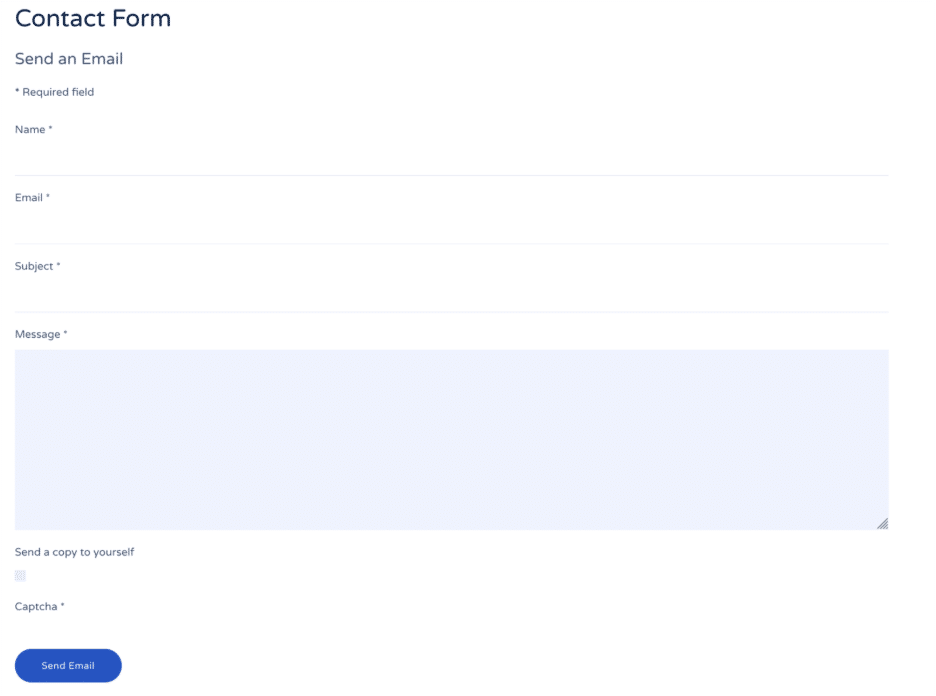Yes, the **’Send a copy to yourself’** checkbox.### How the Attack Worked1. Spammers discovered the contact form on the website.2. They identified the ‘Send a copy to yourself’ feature.3. They automated form submissions with: * Spam content in the message field. * Their email address as the ‘copy recipient’. * Various fake sender names and subjects.4. Each submission triggered two emails: * One to the website owner (normal contact form behavior). * One to the spammer (the ‘copy’ feature).5. Bots submitted the form thousands of times, generating 149,700 emails across several websites with the same issue in the same hosting. Even though the contact form says ‘Captcha’, we identified no Captcha system in place to stop the bots. Even if the Captcha system was working, malicious actors could still manually send spam emails to other people.### The Perfect StormThis attack was particularly effective because it:* **Bypassed spam filters** — emails came from a legitimate server.* **Appeared as normal website activity** — just contact form submissions.* **Provided double delivery** — spammers got their content delivered twice.* **Required no file uploads or system compromise** — just form abuse.* **Scaled infinitely** — bots could submit 24/7.The Emergency Response———————-Immediate Actions Taken:1. Stopped the email service.2. Suspended the user account temporarily to halt all email generation.3. Cleared the email queue.4. Disabled the contact form immediately.### Damage Assessment* 149,700 spam emails were queued for delivery.* Server IP reputation was compromised.* Potential blacklisting by spam databases.* Resource exhaustion affecting other websites on the server.Long-term Prevention Strategies——————————-1. Contact Form Security Best Practices: * Never trust user input. * Add CAPTCHA protection.2. Remove Dangerous Features such as ‘Send copy to myself’ options: * These features provide minimal user value. * They create significant security risks. * Users rarely need copies of their own messages. * If necessary, implement with strict validation.3. Input Validation and Sanitization: * Email validation * Content filtering4. Use a tool like SpamAssassin and enable options in WHM to help with spam. * Navigate to ‘WHM / Home / Service Configuration / Exim Configuration Manager’ and enable one of the following options: * ‘Do not forward mail to external recipients if it matches the Apache SpamAssassin™ internal spam_score setting’. * ‘Do not forward mail to external recipients based on the defined Apache SpamAssassin™ score’.5. Implement SPF Records for Email Authentication: * SPF (Sender Policy Framework) records can help mitigate contact form abuse. In the case described here, the spam emails were originating from localhost, but appearing to come from the legitimate domain. A properly configured SPF record would limit them to the domain itself or a specific public server IP address.Red Flags to Watch For———————-### Immediate Warning Signs* Sudden increase in email queue size.* High CPU usage from email processes (dovecot/lmtp, exim).* Spam complaints from recipients.* Server performance degradation.### Email Log Patterns* Dual email delivery (same timestamp, similar content).* ‘Copy of:’ prefixes in subject lines.* External reply-to addresses in contact form emails.* High volume from single IP addresses.### Form Submission Anomalies* Rapid-fire submissions (multiple per second).* Similar content patterns across submissions.* Suspicious email addresses (temporary email services).* Generic names with marketing content.The Broader Implications————————This attack highlights several important security principles:1. **Every Feature is a Potential Attack Vector:**Even innocent features like ‘Send a copy to yourself’ can be weaponized by attackers. Security must be considered at every level of functionality.2. **Legitimate Infrastructure Can Be Abused:**Spammers increasingly use legitimate servers and services to bypass spam filters, making detection more difficult.3. **Scale Amplifies Everything:**What seems like a minor feature flaw becomes a major security incident when automated tools are involved.4. **Defense in Depth is Essential:**No single security measure would have prevented this attack. Multiple layers of protection are necessary.Conclusion and Action Items—————————The contact form spam attack we investigated demonstrates how quickly a small oversight can escalate into a major security incident. A simple ‘Send a copy to yourself’ feature, combined with inadequate input validation, allowed attackers to generate nearly 150,000 spam emails.### Immediate Actions for Website Owners1. Audit all contact forms for ‘copy to sender’ features.2. Implement CAPTCHA on all public forms.3. Add rate limiting to prevent automated abuse.4. Monitor email queue sizes regularly.5. Set up alerts for unusual email volumes.### Long-term Security Practices1. Regular security audits of all user-facing features.2. Input validation on every form field.3. Logging and monitoring of form submissions.4. Regular review of email sending patterns.5. Incident response planning for spam attacks.### For Developers1. Security-first design approach to new features.2. Threat modeling for user input mechanisms.3. Regular security training and awareness.4. Code reviews focused on abuse potential.5. Testing with malicious inputs during development.The digital landscape is constantly evolving, and attackers are becoming more sophisticated in their methods. Even so, simple vulnerabilities like these can go under developers’ radar.Attackers are constantly looking for ways to take advantage of websites’ vulnerabilities. The key is being prepared with the right tools, knowledge, and response procedures to minimize the impact when it happens.[](https://sucuri.net/live-chat/)  ##### [Gabriel Barbosa](https://blog.sucuri.net/author/gabriel)Gabriel Barbosa is Sucuri’s Security Analyst who joined the company in 2015. His main responsibilities include discovering and cleaning malware in websites. Gabriel’s professional experience covers more than five years of website security analysis. When he isn’t fighting malware, he enjoys game designing and drawing. Connect with him on our [Twitter](https://twitter.com/sucurisecurity).##### Related Tags* [Security](https://blog.sucuri.net/tag/security),* [WordPress Plugins and Themes](https://blog.sucuri.net/tag/wordpress-plugins-and-themes),* [WordPress Security](https://blog.sucuri.net/tag/wordpress-security),* [WordPress Tips](https://blog.sucuri.net/tag/wordpress-tips)##### Related Categories* [Security Advisory](https://blog.sucuri.net/category/security-advisory)* [Website Malware Infections](https://blog.sucuri.net/category/website-malware-infections)* [WordPress Security](https://blog.sucuri.net/category/wordpress-security) * [WordPress Security](https://blog.sucuri.net/category/wordpress-security)[](https://blog.sucuri.net/2017/03/malicious-subdirectories-strike-again.html) [Malicious Subdirectories Strike Again](https://blog.sucuri.net/2017/03/malicious-subdirectories-strike-again.html)——————————————————————————————————————-* Fernando Barbosa* March 17, 2017 In a previous post, we illustrated how attackers were fetching information from compromised sites under their control to display spam content on other hacked websites…. [Read the Post](https://blog.sucuri.net/2017/03/malicious-subdirectories-strike-again.html)  * [Security Advisory](https://blog.sucuri.net/category/security-advisory)* [Website Security](https://blog.sucuri.net/category/website-security)[](https://blog.sucuri.net/2017/07/code-injection-in-phar-signed-php-archives.html) [Code Injection in Signed PHP Archives (Phar)](https://blog.sucuri.net/2017/07/code-injection-in-phar-signed-php-archives.html)——————————————————————————————————————————-* Jeff Channell* July 13, 2017 PHP contains an interesting but rarely used feature called Phar, which stands for PHp ARchive, that allows developers to package entire applications as a single… [Read the Post](https://blog.sucuri.net/2017/07/code-injection-in-phar-signed-php-archives.html)  * [Sucuri Labs](https://blog.sucuri.net/category/sucuri-labs)* [Website Malware Infections](https://blog.sucuri.net/category/website-malware-infections)* [Website Security](https://blog.sucuri.net/category/website-security)[](https://blog.sucuri.net/2017/05/the-elegant-dropper-reusable-code-for-php-shell-installation.html) [The elegant dropper — reusable code for PHP shell installation](https://blog.sucuri.net/2017/05/the-elegant-dropper-reusable-code-for-php-shell-installation.html)——————————————————————————————————————————————————————–* Yuliyan Tsvetkov* May 31, 2017 During our malware research role, we analyze hundreds (if not thousands) of malware samples every day. Quite often, highly-obfuscated techniques are used by attackers to… [Read the Post](https://blog.sucuri.net/2017/05/the-elegant-dropper-reusable-code-for-php-shell-installation.html)  * [Security Advisory](https://blog.sucuri.net/category/security-advisory)* [Website Security](https://blog.sucuri.net/category/website-security)[](https://blog.sucuri.net/2017/09/hacked-websites-mine-crypocurrencies.html) [Hacked Websites Mine Cryptocurrencies](https://blog.sucuri.net/2017/09/hacked-websites-mine-crypocurrencies.html)——————————————————————————————————————* Denis Sinegubko* September 22, 2017 Cryptocurrencies are all the rage now. Bitcoin, altcoins, blockchain, ICO, mining farms, skyrocketing exchange rates — you see or hear this every day in the… [Read the Post](https://blog.sucuri.net/2017/09/hacked-websites-mine-crypocurrencies.html)  * [Website Malware Infections](https://blog.sucuri.net/category/website-malware-infections)* [Website Security](https://blog.sucuri.net/category/website-security)* [WordPress Security](https://blog.sucuri.net/category/wordpress-security)[](https://blog.sucuri.net/2022/04/wordpress-popunder-malware-redirects-to-scam-sites.html) [WordPress Popunder Malware Redirects to Scam Sites](https://blog.sucuri.net/2022/04/wordpress-popunder-malware-redirects-to-scam-sites.html)———————————————————————————————————————————————* Ben Martin* April 1, 2022 Over the last year we’ve seen an ongoing malware infection which redirects website visitors to scam sites. So far this year our monitoring has detected… [Read the Post](https://blog.sucuri.net/2022/04/wordpress-popunder-malware-redirects-to-scam-sites.html)  * [Sucuri Labs](https://blog.sucuri.net/category/sucuri-labs)* [Website Malware Infections](https://blog.sucuri.net/category/website-malware-infections)* [Website Security](https://blog.sucuri.net/category/website-security)[](https://blog.sucuri.net/2023/07/massive-google-colaboratory-abuse-gambling-and-subscription-scam.html) [Massive Google Colaboratory Abuse: Gambling and Subscription Scam](https://blog.sucuri.net/2023/07/massive-google-colaboratory-abuse-gambling-and-subscription-scam.html)————————————————————————————————————————————————————————–* Denis Sinegubko* July 18, 2023 This investigation started with a small and quite simple piece of PHP malware found on a hacked website. We located the following PHP code, responsible… [Read the Post](https://blog.sucuri.net/2023/07/massive-google-colaboratory-abuse-gambling-and-subscription-scam.html)  * [Security Advisory](https://blog.sucuri.net/category/security-advisory)* [Website Security](https://blog.sucuri.net/category/website-security)* [WordPress Security](https://blog.sucuri.net/category/wordpress-security)[](https://blog.sucuri.net/2025/09/vulnerability-patch-roundup-september-2025.html) [Vulnerability -& Patch Roundup — September 2025](https://blog.sucuri.net/2025/09/vulnerability-patch-roundup-september-2025.html)————————————————————————————————————————————* Sucuri Malware Research Team* September 30, 2025 Vulnerability reports and responsible disclosures are essential for website security awareness and education. Automated attacks targeting known software vulnerabilities are one of the leading causes… [Read the Post](https://blog.sucuri.net/2025/09/vulnerability-patch-roundup-september-2025.html)  * [Sucuri](https://blog.sucuri.net/category/sucuri)* [Website Security](https://blog.sucuri.net/category/website-security)* [WordPress Security](https://blog.sucuri.net/category/wordpress-security)[](https://blog.sucuri.net/2018/08/massive-wordpress-redirect-campaign-targets-vulnerable-tagdiv-themes-and-ultimate-member-plugins.html) [Massive WordPress Redirect Campaign Targets Vulnerable tagDiv Themes and Ultimate Member Plugins](https://blog.sucuri.net/2018/08/massive-wordpress-redirect-campaign-targets-vulnerable-tagdiv-themes-and-ultimate-member-plugins.html)—————————————————————————————————————————————————————————————————————————————–* Denis Sinegubko* August 22, 2018 This August, we’ve seen a new massive wave of WordPress infections that redirect visitors to unwanted sites. When redirected, users see annoying pages with random… [Read the Post](https://blog.sucuri.net/2018/08/massive-wordpress-redirect-campaign-targets-vulnerable-tagdiv-themes-and-ultimate-member-plugins.html)  * [Security Advisory](https://blog.sucuri.net/category/security-advisory)* [Security Education](https://blog.sucuri.net/category/security-education)* [Sucuri](https://blog.sucuri.net/category/sucuri)* [Website Security](https://blog.sucuri.net/category/website-security)[](https://blog.sucuri.net/2019/01/owasp-top-10-security-risks-part-v.html) [OWASP Top 10 Security Risks — Part V](https://blog.sucuri.net/2019/01/owasp-top-10-security-risks-part-v.html)—————————————————————————————————————-* Gerson Ruiz* January 15, 2019 To bring awareness to what threatens the integrity of websites, we are continuing a series of posts on the OWASP top 10 security risks. The… [Read the Post](https://blog.sucuri.net/2019/01/owasp-top-10-security-risks-part-v.html)  * [Security Advisory](https://blog.sucuri.net/category/security-advisory)* [Website Security](https://blog.sucuri.net/category/website-security)* [WordPress Security](https://blog.sucuri.net/category/wordpress-security)[](https://blog.sucuri.net/2022/01/accesspress-themes-hit-with-targeted-supply-chain-attack.html) [AccessPress Themes Hit With Targeted Supply Chain Attack](https://blog.sucuri.net/2022/01/accesspress-themes-hit-with-targeted-supply-chain-attack.html)———————————————————————————————————————————————————* Ben Martin* January 20, 2022 Security researchers at Automattic recently reported that the popular WordPress plugin and theme authors AccessPress were compromised and their software replaced with backdoored versions. The… [Read the Post](https://blog.sucuri.net/2022/01/accesspress-themes-hit-with-targeted-supply-chain-attack.html)
Related Tags:
NAICS: 54 – Professional
Scientific
Technical Services
NAICS: 519 – Web Search Portals
Libraries
Archives
Other Information Services
NAICS: 541 – Professional
Scientific
Technical Services
NAICS: 518 – Computing Infrastructure Providers
Data Processing
Web Hosting
Related Services
NAICS: 51 – Information
Denis
Blog: Sucuri
Exploitation for Client Execution
Associated Indicators:
serverhost.net
info@website.com
spammer@sender.com
website_user@serverhost.net