

report  Download / Print article PDF ##### ShareCopied to clipboard ##### Share##### Facebook##### Linkedin##### X##### Copy LinkCopied to clipboard ##### Share##### Facebook##### Linkedin##### X##### Copy LinkA method to assess ‘forgivable’ vs ‘unforgivable’ vulnerabilities=================================================================Research from the NCSC designed to eradicate vulnerability classes and make the top-level mitigations easier to implement. Invalid DateTime  Fahmi Ruddin Hidayat via Getty Images ##### IN THIS REPORT1. [Scope](#section_1)2. [Background](#section_2)3. [Research methodology](#section_3)4. [Assessing ‘ease of implementation’](#section_4)5. [Analysis of top-level mitigations](#section_5)6. [Worked example: applying methodology to a recent vulnerability](#section_6)7. [Conclusions](#section_7)8. [References](#section_8)#### **Executive Summary**All systems contain vulnerabilities. In fact, the number of Common Vulnerabilities and Exposures (CVEs) in commodity technology continues to rise. While there are a number of factors that are driving the increasing numbers, the NCSC expect this trend to continue unless interventions are made.We know many vulnerabilities are complex and hard to avoid. But vulnerabilities that are trivial to find (and that occur time and time again) are ones the NCSC are aiming to drive down at scale. These ‘unforgivable vulnerabilities’, a phrase coined by [Steve Christie in his 2007 MITRE paper](https://cwe.mitre.org/documents/unforgivable_vulns/unforgivable.pdf), ‘*are beacons of a systematic disregard for secure development practices. They simply should not appear in software that has been designed, developed, and tested with security in mind*’.This paper extends the ideas in the MITRE paper and proposes a method to assess a vulnerability as ‘forgivable’ or ‘unforgivable’. More importantly, this paper intends to generate discussion with vendors, and is a call on them to work to eradicate vulnerability classes and make the top-level mitigations discussed in this paper easier to implement.The NCSC’s analysis seeks to identify the **root cause**of vulnerabilities (opposed to the details provided in the individual vulnerability advisory), using the CWE Top 25 Most Dangerous Software Releases for 2023. Having identified 11 top-level mitigations required to manage these vulnerabilities, we assigned an ‘ease of implementation’ score to each top-level mitigation, based on:* direct and indirect costs* knowledge (that is, how widely known and understood is the mitigation)* technical feasibilityResearchers can then assess an individual vulnerability, and use the ‘ease of implementation’ scores (which we classify as ‘easy’, ‘medium’ or ‘hard’ to implement) to assess how difficult it is to apply the mitigations. Vulnerabilities with ‘easy’ mitigations are declared ‘unforgivable’.Most of the 13 ‘unforgivable vulnerabilities’ mentioned in the original MITRE 2007 paper still exist in one form or another. At the core of our research is the desire to eradicate vulnerability classes and make the top-level mitigations easier to implement. The NCSC believe this can be best done by making operating systems more secure, by improving development frameworks, and by encouraging developers and vendors to adopt secure programming concepts. ### Note:This guide is written for software development and security professionals, and assumes a familiarity with modern development techniques. The following abbreviations are used throughout.**CISA** Cybersecurity and Infrastructure Security Agency (US government agency)**CVE** Common Vulnerabilities and Exposures**CVSS** Common Vulnerability Scoring System**CWE** Common Weakness Enumeration**KEV** Known Exploited Vulnerabilities (CISA KEV List/Catalog)**KLOC** Thousand Lines of Code**NCSC** National Cyber Security Centre**NVD** National Vulnerabilities Database**OWASP** Open Web Application Security Project**SQL** Structured Query Language *** ** * ** ***Scope—–The aim of this technical paper is to define a method that allows security professionals to determine if a given software vulnerability is ‘forgivable’ or ‘unforgivable’ as defined below. Show all ### Forgivable vulnerabilitiesShow A vulnerability that exists in software because implementing known mitigations is deemed hard. This could be because:* the vulnerability is subtle* there is lack of knowledge about it* the cost to implement the mitigation is too high* the technical implementation of the mitigation relies on too many (or too complex) prerequisites ### Unforgivable vulnerabilitiesShow A vulnerability that should not exist in software as the difficulty of implementing mitigations is deemed negligible. This could be because:* the mitigation is fully documented* it is cheap to implement* the technical implementation of the mitigation does **not** rely on too many (or too complex) prerequisites**Note:**There may be multiple causes of a single vulnerability, with each cause having a different mitigation. ### Non-exploitable vulnerabilitiesShow There is a third class of vulnerability which we have called **Non-exploitable**. We don’t discuss this class further in this paper, but arguably this is a vulnerability that is not a security risk. This could be because:* there is no code path to be able to exploit it, or* there are mitigations in place to prevent the vulnerability being exploited, or* it is unlikely that chaining vulnerabilities will allow exploitation *** ** * ** ***Background———-Analysis by Eloff and Bella (2018), Williams et al. (2018) and Zheng et al. (2019) suggests that no single control has had a significant effect on reducing the number of software bugs. The average number of bugs in software has remained constant over the last 20 years (McConnell, 2004; Coverity, 2014; Coverity, 2019). Table 1 provides an overview of the statistics. Coverity (2019) identified the average defect density for the software industry to be 1 defect per thousand lines of code (KLOC). This highlights that whatever the software product and whatever the programming language used, software defects will always be present.Table 1: Average number of software defects over time **Source** **Defects per KLOC** Jones (1986) 0.5 Microsoft Apps production (McConnel, 2004) 0.5 Coverity (2014) 0.76 Coverity (2019) 1Hatton et al. (2017) found that software source code in systems doubles on average every 3.5 years. This is largely due to:* user demand for additional functionality and sophistication* the increasing hardware processing power required to accommodate the increase in demandsIf the source code base doubles in size, the number of defects will increase accordingly. Gaikovina Kula et al. (2010) argue that the increasing complexity of source code has been observed to correlate with increasing the time to remediate a software defect. Therefore, source code base size and the average number of defects per KLOC should be taken into consideration when assessing ease of implementation of mitigations.Figure 1 illustrates the ‘System Programming Stack’, a generic representation of how a modern operating system is designed. The example vulnerabilities discussed in this paper affect different operating systems / platforms at different levels of this generic stack.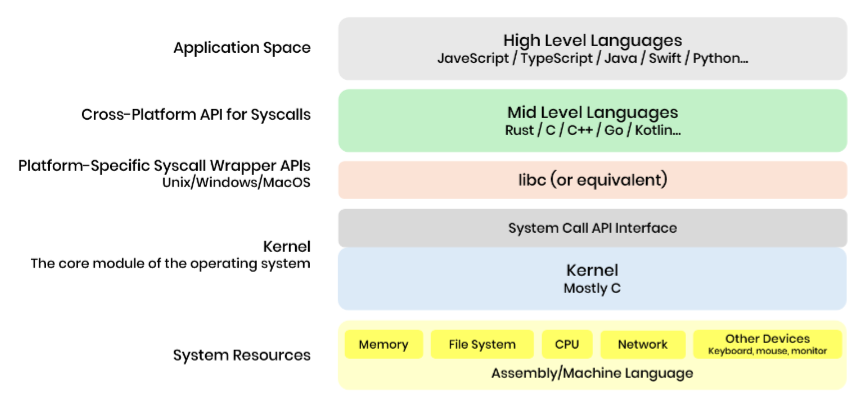Figure 1: System Programming Stack (image: [iglu.net](https://iglu.net/)) *** ** * ** ***Research methodology——————–The research methodology used is as follows:1. Analyse the ‘CWE Top 25 Most Dangerous Software Weaknesses 2023’ (shown in table 2 below).2. Identify the top-level mitigations required to manage the vulnerabilities.3. Assign each mitigation with a score that ranks its ‘ease of implementation’ (that is, how easy it is to implement the mitigation, based on **cost** , **technical** **feasibility** and **knowledge**).4. To assess an individual vulnerability, identify the top-level mitigations required to manage that vulnerability.5. Use the total implementation scores to *quantify* how easily the mitigations could be applied.6. Vulnerabilities with ‘easy’ mitigations are declared ‘unforgivable’.**Note:** The ease of implementation is predicated on the mitigation being implemented at the beginning of the product’s development and not retrofitted. The cost and technical feasibility scores will increase dramatically if the mitigation is retrofitted.The source data for this paper comes from both the Common Weakness Enumeration (CWE) Top 25 Most Dangerous Software Weaknesses of 2023 ([MITRE, 2023](https://cwe.mitre.org/top25/archive/2023/2023_top25_list.html)), shown in table 2 below. This list was calculated by MITRE analysing public vulnerability data in the U.S. National Vulnerability Database (NVD) for their root causes via CWE mappings. Note that:* the list is based on 43,996 CVE records for vulnerabilities in 2021 and 2022* the mapping data was pulled from the NVD on March 27, 2023* the top-level mitigations are drawn from the detailed Common Weakness Enumeration, and summarised for the purposes of this research paper* further analysis can be undertaken against the ‘2023 CWE Top 10 KEV Weaknesses’ (which consists of CVE records that appear in the CISA Known Exploited Vulnerabilities -[KEV-] Catalog, CISA 2023)Table 2: CWE Top 25 Most Dangerous Software Weaknesses 2023 **Rank** **ID** **Name** **CVEs in KEV** **Top-Level Mitigation** 1 [CWE-787](https://cwe.mitre.org/data/definitions/787.html) Out-of-bounds Write 70* Language Selection* Libraries or Frameworks* Input Validation2 [CWE-79](https://cwe.mitre.org/data/definitions/79.html) Improper Neutralization of Input During Web Page Generation (‘Cross-site Scripting’) 4* Libraries or Frameworks3 [CWE-89](https://cwe.mitre.org/data/definitions/89.html) Improper Neutralization of Special Elements used in an SQL Command (‘SQL Injection’) 6* Libraries or Frameworks* Output Encoding* Input Validation4 [CWE-416](https://cwe.mitre.org/data/definitions/416.html) Use After Free 44* Language Selection5 [CWE-78](https://cwe.mitre.org/data/definitions/78.html) Improper Neutralization of Special Elements used in an OS Command (‘OS Command Injection’) 23* Sandbox or Jail* Reduce the Attack Surface* Libraries or Frameworks* Output Encoding* Input Validation* Enforcement by Conversion* Compilation or Build Hardening* Secure Architecture and Design6 [CWE-20](https://cwe.mitre.org/data/definitions/20.html) Improper Input Validation 35* Reduce the Attack Surface* Libraries or Frameworks* Input Validation7 [CWE-125](https://cwe.mitre.org/data/definitions/125.html) Out-of-bounds Read 2* Input Validation* Language Selection8 [CWE-22](https://cwe.mitre.org/data/definitions/22.html) Improper Limitation of a Pathname to a Restricted Directory (‘Path Traversal’) 16* Input Validation* Libraries or Frameworks* Sandbox or Jail9 [CWE-352](https://cwe.mitre.org/data/definitions/352.html) Cross-Site Request Forgery (CSRF) 0* Libraries or Frameworks10 [CWE-434](https://cwe.mitre.org/data/definitions/434.html) Unrestricted Upload of File with Dangerous Type 5* Input Validation* Enforcement by Conversion11 [CWE-862](https://cwe.mitre.org/data/definitions/862.html) Missing Authorization 0* Reduce the Attack Surface* Libraries or Frameworks12 [CWE-476](https://cwe.mitre.org/data/definitions/476.html) NULL Pointer Dereference 0* Input Validation13 [CWE-287](https://cwe.mitre.org/data/definitions/287.html) Improper Authentication 10* Libraries or Frameworks14 [CWE-190](https://cwe.mitre.org/data/definitions/190.html) Integer Overflow or Wraparound 4* Language Selection* Libraries or Frameworks* Input Validation15 [CWE-502](https://cwe.mitre.org/data/definitions/502.html) Deserialization of Untrusted Data 14* Input Validation16 [CWE-77](https://cwe.mitre.org/data/definitions/77.html) Improper Neutralization of Special Elements used in a Command (‘Command Injection’) 4* Libraries or Frameworks* Input Validation17 [CWE-119](https://cwe.mitre.org/data/definitions/119.html) Improper Restriction of Operations within the Bounds of a Memory Buffer 7* Libraries or Frameworks* Input Validation18 [CWE-798](https://cwe.mitre.org/data/definitions/798.html) Use of Hard-coded Credentials 2* Secure Architecture and Design19 [CWE-918](https://cwe.mitre.org/data/definitions/918.html) Server-Side Request Forgery (SSRF) 16* Language Selection* Input Validation20 [CWE-306](https://cwe.mitre.org/data/definitions/306.html) Missing Authentication for Critical Function 8* Secure Architecture and Design* Libraries or Frameworks21 [CWE-362](https://cwe.mitre.org/data/definitions/362.html) Concurrent Execution using Shared Resource with Improper Synchronization (‘Race Condition’) 8* Language Selection22 [CWE-269](https://cwe.mitre.org/data/definitions/269.html) Improper Privilege Management 5* Separation of Privilege23 [CWE-94](https://cwe.mitre.org/data/definitions/94.html) Improper Control of Generation of Code (‘Code Injection’) 6* Secure Architecture and Design* Input Validation24 [CWE-863](https://cwe.mitre.org/data/definitions/863.html) Incorrect Authorization 0* Secure Architecture and Design* Libraries or Frameworks25 [CWE-276](https://cwe.mitre.org/data/definitions/276.html) Incorrect Default Permissions 0* Separation of Privilege *** ** * ** ***Assessing ‘ease of implementation’———————————-To assess the ‘ease of implementation’ of the top-level mitigations, several methods were considered:1. **Cost-effectiveness analysis:** a form of economic analysis that compares the relative costs and outcomes (effects) of different courses of action. While typically used in the healthcare industry, it is increasingly used in other domains (ICEAA, 2024).2. **Cost-benefit analysis:** the systematic and analytical process of comparing benefits and costs in evaluating the desirability of a project or programme. It attempts to answer such questions as whether a proposed project is worthwhile, the optimal scale of a proposed project and the relevant constraints (Mishan and Quah, 2020).3. **Ease/impact matrix:**the effort-to-impact matrix is a simple but valuable tool that can help instructional coaches, teacher teams and administrators to prioritise their efforts and make strategic choices about which steps to take and when. It allows the user to map out potential strategies and identify how much effort each will take versus how much impact it is likely to make (Helmke, 2022).Based on the understanding of the different assessment methods, a cost-effectiveness analysis approach was chosen with the following factors taken into consideration:1. **Cost**: including direct costs (such as licensing a library) and indirect costs (such as additional time needed to code/recode).2. **Knowledge**: how widely-known and understood is the mitigation.3. **Technical Feasibility**: a feasibility analysis evaluates the mitigation’s potential for success, and how easy the mitigation is to achieve. This includes evaluating the advantages and disadvantages of the mitigation, and any technical requirements or prerequisites for the mitigation (such as hardware support).For each top-level mitigation, the **cost** , **knowledge** and **technical feasibility** is assigned a score out of 3, based on the NCSC’s analysis of the literature review of academic papers and industry white papers:* 1 indicates ‘easy/inexpensive’* 3 indicates ‘hard/inexpensive’* 2 indicates the intermediateWhen the scores are added together, they provide an overall ‘Implication Score’ for each mitigation, which can be assigned a level of difficulty.Table 3: Implementation Score **Implementation Score** **Difficulty** 3-4 Easy 5-6 Medium 7-9 HardFor example, for the top-level mitigation **Input Validation**:* cost = **1*** knowledge = **1*** technical feasibility = **1**This gives a total of **3** , which means the difficulty for this mitigation can be declared **Easy**.The following table lists the implementation score for each top-level mitigation, and the corresponding difficulty level.Table 4: Implementation Score for top-level mitigations **Top-level mitigation** **Implementation Score** **Difficulty** Input Validation 3 Easy Output Encoding 3 Easy Reduce the Attack Surface 5 Medium Enforcement by Conversion 5 Medium Sandbox or Jail 5 Medium Secure Programming 6 Medium Compilation or Build Hardening 6 Medium Separation of Privilege 6 Medium Libraries or Frameworks 6 Medium Secure Architecture and Design 7 Hard Language Selection 8 Hard *** ** * ** ***Analysis of top-level mitigations———————————This section explains how we arrived at the Implementation Score for each of the top-level mitigations. They are presented in order of difficulty, starting with the easiest mitigations first.### **Input Validation**The OWASP Cheat Sheet (OWASP, 2021) provides the following examples for input validation strategies:* data type validators available natively in web application frameworks (such as [Django Validators](https://docs.djangoproject.com/en/1.11/ref/validators/) and [Apache Commons Validators](https://commons.apache.org/proper/commons-validator/apidocs/org/apache/commons/validator/package-summary.html#doc.Usage.validator))* validation against [JSON Schema](http://json-schema.org/) and [XML Schema (XSD)](https://www.w3schools.com/xml/schema_intro.asp) for input in these formats* type conversion (e.g. *Integer.parseInt()* in Java, *int()* in Python) with strict exception handlingInput Validation is a subset of the Libraries or Frameworks mitigation. However, its prevalence in the mitigation list means it’s worth listing separately. **Score** **Evidence** Cost 1 Low/no direct and indirect costs Knowledge 1 Widely understood and widely available Feasibility 1 Many implementations for most/all languages **Total** **3 (Easy)** ### **Output Encoding**Encoding and escaping are defensive techniques meant to stop injection attacks. Encoding (commonly called ‘output encoding’) involves translating special characters into some different but equivalent form that is no longer dangerous in the target interpreter, for example translating the `<` character into the `< ;` string when writing to an HTML page.Escaping involves adding a special character before the character/string to avoid it being misinterpreted, for example, adding a `-` character before a `'` (double quote) character so that it is interpreted as text and not as closing a string.Output Encoding is a subset of the Libraries or Frameworks mitigation. However, its prevalence in the mitigation list means it's worth listing separately. **Score** **Evidence** Cost 1 Low/no direct and indirect costs Knowledge 1 Widely understood and widely available Feasibility 1 Many implementations for most/all languages **Total** **3 (Easy)** ### **Reduce the Attack Surface**Originating from the security sector, an 'attack surface' measure typically reflects the number of input points and output points that can be exploited by a potential attacker. A larger attack surface provides more places to attack, and more opportunities for developers to introduce weaknesses. In some cases, this measure may reflect other aspects of quality besides security. For example, a product with many inputs and outputs may require a large number of tests in order to improve code coverage. This can also include the use of functions, libraries, and frameworks.The attack surface of an application is the union of code, interfaces, services, protocols, and practices available to all users, with a strong focus on what is accessible to unauthenticated users (Microsoft, 2019). Therefore, developers should look to reduce the exposure of the application at the earliest stages of development, specifically at the design stage. Further considerations should be given at the coding stage and finally at runtime. **Score** **Evidence** Cost 2 Removing code/functionality will take time and thus cost Knowledge 1 Concept is widely known and understood Feasibility 2 Technically feasible but challenges in justifying removal of functionality/features **Total** **5 (Medium)** ### **Enforcement by Conversion**This mitigation involves converting the input into a different, well-controlled representation. For example, in PHP, a common mechanism for avoiding SQL injection is to apply `intval()` to all numeric inputs, which guarantees that the generated value is a number. **Score** **Evidence** Cost 1 Usually available as part of the language Knowledge 3 Not widely used or understood Feasibility 1 Does not rely upon any prerequisite **Total** **5 (Medium)** ### **Sandbox or Jail**Run the code in a 'jail' or similar sandbox environment that enforces strict boundaries between the process and the operating system. This may effectively restrict which files can be accessed in a particular directory, or which commands can be executed by the software.OS-level examples include the Unix chroot jail, AppArmor, and SELinux. In general, managed code may provide some protection. For example, `java.io.FilePermission` in the Java SecurityManager allows the software to specify restrictions on file operations.This may not be a feasible solution, and it only limits the impact to the operating system; the rest of the application may still be subject to compromise. **Score** **Evidence** Cost 1 Usually part of the language/OS Knowledge 2 Concept is known and partially understood Feasibility 2 Technically feasible but with limitations **Total** **5 (Medium)** ### **Secure Programming**This is a large subject and typically is down to the developers. Examples of secure programming include:* when freeing pointers, be sure to set them to NULL once they are freed* if all pointers that could have been modified are sanity-checked previous to use, nearly all NULL pointer dereferences can be prevented* ensure that all protocols are strictly defined such that all out-of-bounds behaviour can be identified simply, and require strict conformance to the protocol* when deserializing data, populate a new object rather than just deserializing* explicitly define a final object() to prevent deserialization* use library calls rather than external processes to recreate the desired functionality
**Score** **Evidence** Cost 2 Requires skilled developers Knowledge 2 Concept is known and partially understood Feasibility 2 Technically feasible with few technical prerequisites **Total** **6 (Medium)** ### **Compilation or Build Hardening**There are 4 areas to be examined when hardening the toolchain: configuration, preprocessor, compiler, and linker. Developers and their development environments are part of the software supply chain, so if their accounts get compromised, attackers get control over parts of this chain. Nowadays, many developers are working on these environments from their homes and can end up as entry points for malicious code or let attackers steal credentials to production services. Therefore, while ‘hardening’ used to mean securing a developer’s local computer, it now also means bolstering the security of the tools they need to do their work. These include source code management (SCM) tools, binary artifacts, and build/CI/CD pipelines.Build hardening includes using automatic buffer overflow detection mechanisms. These are offered by certain compilers or compiler extensions, e.g. Microsoft Visual Studio /GS flag, Fedora/Red Hat FORTIFY_SOURCE GCC flag, StackGuard, and ProPolice, which provide various mechanisms including canary-based detection and range/index checking. D3-SFCV (Stack Frame Canary Validation) from D3FEND (MITRE, 2023) discusses canary-based detection in detail. Other examples include the Control-flow Enforcement Technology (CET) Shadow Stack computer processor feature. It provides capabilities to defend against return-oriented programming (ROP) based attacks. **Score** **Evidence** Cost 1 Usually available as part of the tool chain Knowledge 2 Not widely understood Feasibility 3 Impact on performance and usually specific to compiler or architecture **Total** **6 (Medium)** ### **Separation of Privilege**Separation of privilege, also called privilege separation, refers to both the ‘segmentation of user privileges across various, separate users and accounts’ (Microsoft, 2021), and the compartmentalisation of privileges across various application or system sub-components, tasks, and processes.A different, more generic description is that multiple conditions need to be met in order to gain access to a given process or object. A control could be a permission, for example. **Score** **Evidence** Cost 2 Will take time and thus cost Knowledge 2 Concept is widely known and understood Feasibility 2 Technically feasible (see XP to Vista implementation) but requires prerequisites **Total** **6 (Medium)** ### **Libraries or Frameworks**The difference between a library and a framework can be summarised as follows:* for a library, your application code calls the library code* for a framework, your application code is called by the frameworkThe general advice is to use the latest version of a vetted library or framework to fulfil the functionality that is required. This is largely to avoid duplication, development time and in some cases to avoid creating your own implementation of a complex function such as crypt. The main security assumption is that the library or framework would not allow a weakness to occur, or provides constructs that make weakness easier to avoid.As with the choice of programming language, the choice of library or framework also has several considerations, including:* size and complexity – ideally you would want to use as lightweight library / framework as possible (to avoid bloatware etc).* performance requirements* use automated bundle tracking, e.g. to manage the latest version or to check for large updates* impact to web accessibility* backward compatibility* licensing* documentation* correctly implemented* updates* security* support / community / vendor support – some libraries are backed by vendors or communities who invest time and money into keeping libraries up to date and secureHowever, there are significant implications of migrating between frameworks. It is typically non-trivial, time-consuming, can often be fraught with complex technical challenges and can result in a lot of code to be re-written (LinkedIn, 2023; Opsview, 2023). **Score** **Evidence** Cost 2 Licensing costs Knowledge 2 Current level of knowledge as highlighted by JetBrains (2022) Feasibility 2 Performance and security impact **Total** **6 (Medium)** ### **Secure Architecture and Design**Ensuring the product is securely architected and designed should be done at the beginning of the product development. Redesign of the product’s security architecture and/or design, or to retrospectively add core security mitigations, is expensive and difficult.Examples include:* divide the product into anonymous, normal, privileged, and administrative areas* refactor the product so that you do not have to dynamically generate code
**Score** **Evidence** Cost 2 A critical, core process of software development Knowledge 3 Not widely used or understood Feasibility 2 Technically feasible with few technical prerequisites **Total** **7 (Hard)** ### **Language Selection**The choice of programming language will have a profound impact on the security of the application. While modern languages, such as Rust and Swift, are both type-safe and memory-safe, languages such as C, C++, and assembly do not offer full type and memory safety for developers.In theory an engineer has a choice of programming languages to develop in. However, there are a number of constraints:1. The ecosystem, what support is there, will it be around for a long time?2. What is the environment / platform for the project (web, mobile, embedded device, OS application, etc.)?3. What are the specific requirements for libraries, features, and tools for the programming language?4. What is the performance consideration and is the languages suitable to accommodate this performance?5. Is the developer able to code in this language?At the beginning of a new project, developers should choose a type-safe and memory-safe programming language. The State of Developer Ecosystem 2022 survey (JetBrains, 2022) of 29,269 developers from around the world highlighted that one out of every two developers is planning to adopt a new language. The top choices for next languages are Go, Rust, Kotlin, TypeScript, and Python. This highlights that the current level of knowledge is assessed at level 2.However, there are a vast majority of even modern applications and operating systems written in C and C++. As an example, Chrome announced that they will soon support third-party Rust libraries (Google Security Blog, 2023). But Chrome has millions of lines of C++ and it will take a long time to migrate. This would mean the technical feasibility of retrospectively applying this mitigation is assessed at level 3. **Score** **Evidence** Cost 3 Listed constraints would increase costs Knowledge 2 Current level of knowledge as highlighted by JetBrains, 2022 Feasibility 3 Could be limited by requirements or time taken if retrospectively applying this mitigation (Google Security Blog, 2023) **Total** **8 (Hard)** *** ** * ** ***Worked example: applying methodology to a recent vulnerability————————————————————–Below is an example of how the analysis can be used to determine if a vulnerability is ‘unforgivable’.**CVE-202X-XXXXX Vendor Application Unauthenticated SQL Injection Vulnerability**Vendor Advisory: http://www.example.com/securityCVSS v3.x Base: 9.8 CriticalAnalysis: https://www.ncsc.gov.uk/sql-deep-dive-and-indicators-of-compromise/Analysis of the vulnerability by examining changes to the code in the updated version identified three issues: **Analysis** **Relevant Mitigation** **Ease of implementation** Building the SQL query by concatenating arguments passed from user input has been replaced with a safer SQL library. Libraries or Frameworks Medium GetQueryVarsFromUser() function removed. Reduce the Attack Surface Medium Variables are set to NULL before they are used. Input Validation EasyWhile the exploitable vulnerability was difficult to find, one of the root causes was deemed **easy** to implement, and two were rated **medium**.This vulnerability should not have existed and is **unforgivable**.*** ** * ** ***Conclusions———–At the core of this paper is the need to eradicate vulnerability classes and make the top-level mitigations easier to implement. This can be focussed on the following three areas: 1. 1 #### Operating Systems * Banning/remove unsafe functions. For example, there was a 41% of vulnerability reduction with the move from XP to Vista from banning strcpy and associated functions (Howard, 2007). * Handle security and reliability in common frameworks, APIs, and libraries. Only exposing an interface that makes writing code with common classes of security vulnerabilities impossible. * Make high impact mitigations much easier to implement via APIs (sandboxing, privilege separation), or enforce the use of these.2. 2 #### Development Environments The development environments, and specifically the Integrated Development Environment (IDE), need to make the following easier for developers: * programming language documentation * understanding (and fixing) compiler warnings * using secure programming languages in default new projects * migrating code from existing projects to secure programming languages * finding and integrating trusted third party frameworks and libraries * using built-in tools to highlight vulnerabilities in source code during development * eradicating vulnerability classes at the beginning of development3. 3 #### Developers (vendors) Developers and vendors need to adopt secure programming concepts, and enforce their use to make it harder for the mistakes to be made at source. Vulnerabilities must be caught early in the development process. This includes the understanding of the following topics: * methodology and process to catch vulnerabilities during development * basics of C programming and emphasising programming languages* memory layout/architecture and emphasising/adopting the use of technologies such as Rust and CHERI ### Further researchThe method of assessing forgivable and unforgiveable vulnerabilities discussed in this paper could be matured to take account of other factors, including:* the role of the product and the severity of the vulnerability (for example, if the product is an internet-facing service and the vulnerability can be exploited pre-authentication)* how to determine the vulnerability management maturity of the vendor/developer (for example, is the vendor monitoring vulnerabilities throughout the expected lifecycle of the product)* is being unaware of a vulnerability (that is later exploited in the wild) ‘unforgivable’, and should other factors also be taken into consideration (including know bug/vulnerability classes and their typical mitigations) *** ** * ** ***References———-Apple (2022) *Blog – Towards the next generation of XNU memory safety: kalloc_type – Apple Security Research* . Available at: Blog – Towards the next generation of XNU memory safety: kalloc_type – Apple Security Research (Accessed: 20 November 2023).Baires Dev (2022) *How to Choose the Right Programming Language for a New Project* ., *BairesDev* Available at: How to Choose the Right Programming Language for a New Project -| BairesDev (Accessed: 7 March 2024).Christey, S. (2007) ‘*Unforgivable Vulnerabilities*’CISA (2023a) *2022 Top Routinely Exploited Vulnerabilities -| CISA* . Available at: 2022 Top Routinely Exploited Vulnerabilities -| CISA (Accessed: 28 September 2023).CISA (2023b) *Known Exploited Vulnerabilities Catalog -| CISA* . Available at: Known Exploited Vulnerabilities Catalog -| CISA (Accessed: 23 January 2024).Coverity (2014) *2014 Coverity Scan Report* . Available at: (Accessed: 17 June 2019).Coverity (2019) *Coverity* . Available at: Coverity Scan – Static Analysis (Accessed: 17 June 2019).Eloff, J. and Bella, M.B. (2018) ‘Software Failures: An Overview’, in *Software Failure Investigation*. Cham: Springer International Publishing, pp. 7–24. Available at: 10.1007/978-3-319-61334-5_2 (Accessed: 13 June 2019).Fulton, K.R., Chan, A., Votipka, D., Hicks, M. and Mazurek, M.L. (2021) ‘*Benefits and Drawbacks of Adopting a Secure Programming Language: Rust as a Case Study* ‘, , pp. 597–616. Available at: Benefits and Drawbacks of Adopting a Secure Programming Language: Rust as a Case Study -| USENIX (Accessed: 28 September 2023).Gaikovina Kula, R., Fushida, K., Kawaguchi, S. and Iida, H. (2010) ‘Analysis of Bug Fixing Processes Using Program Slicing Metrics’, in Ali Babar, M., Vierimaa, M. and Oivo, M. (eds.) *Product-Focused Software Process Improvement*. Berlin, Heidelberg: Springer Berlin Heidelberg, pp. 32–46. Available at: 10.1007/978-3-642-13792-1_5 (Accessed: 10 July 2019).Google Security Blog (2023) Supporting the Use of Rust in the Chromium Project. *Google Online Security Blog* . Available at: Supporting the Use of Rust in the Chromium Project (Accessed: 28 September 2023).Hanley, Z. (2023) *MOVEit Transfer CVE-2023-34362 Deep Dive and Indicators of Compromise* ., Autonomous Pentesting Platform Available at: MOVEit Transfer CVE-2023-34362 Deep Dive and Indicators of Compromise (Accessed: 24 January 2024).Helmke, S (2022) *Where do you start when everything feels urgent? Use an effort-to-impact matrix* . Available at: [WHERE DO YOU START WHEN EVERYTHING FEELS URGENT? – ProQuest](https://www.proquest.com/docview/2670469689?pq-origsite=gscholar&fromopenview=true&sourcetype=Scholarly%20Journals) (Accessed: 22 March 2024).Howard, M (2007) *Howard.pdf* . Available at: [https://www….](https://www.acsac.org/2007/workshop/Howard.pdf)
Related Tags:
CHROMIUM
Charcoal Typhoon
NAICS: 54 – Professional
Scientific
Technical Services
NAICS: 334 – Computer And Electronic Product Manufacturing
NAICS: 519 – Web Search Portals
Libraries
Archives
Other Information Services
NAICS: 541 – Professional
Scientific
Technical Services
NAICS: 92 – Public Administration
NAICS: 922 – Justice
Public Order
Safety Activities
NAICS: 33 – Manufacturing – Metal
Electronics And Other
Associated Indicators:
news.blackduck.com
iglu.net